
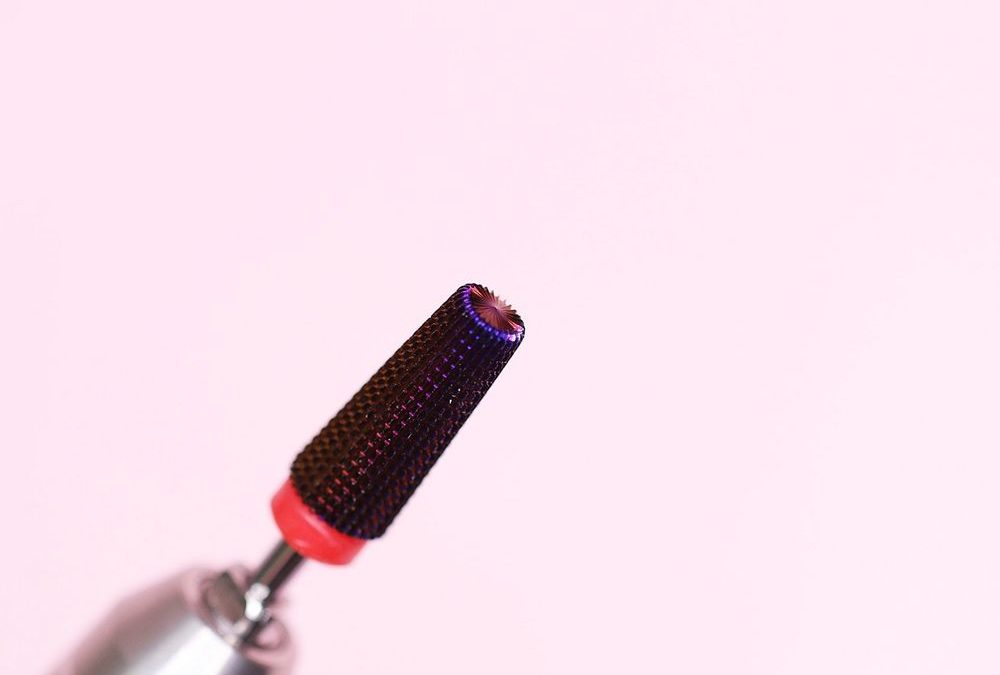
The anodized titanium 5-in-1 fine grit design keeps finish work safe and elegant.
How does heat build when you use this fine-grit bit?
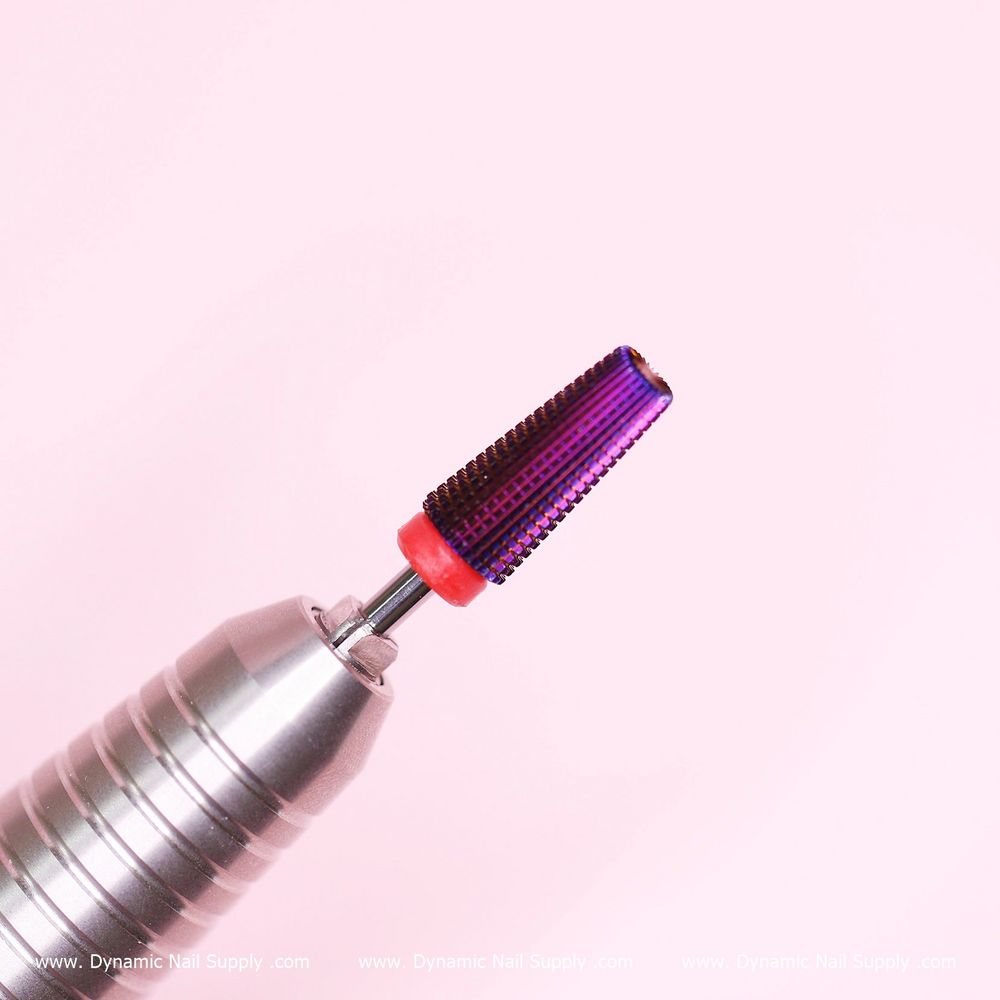
Heat comes from friction. Small contact areas create high temperatures quickly. Long, constant strokes trap heat against the acrylic and the cuticle. Heavy pressure increases friction. High RPMs amplify tiny mistakes. The bit pictured has a rainbow titanium anodized finish with visible fine ridged texture. That very fine texture gives control. It also needs gentler handling than coarse bits.
What RPMs and directions should you choose?
Start low. Fine-grit carbide works best at modest speeds. Use 5,000–12,000 RPM for most sealing and smoothing passes. Higher speeds are for very light blending only. Match speed to the task. Reduce RPM when you feel resistance or see a brown edge forming.
This 5-in-1 style is bidirectional. You may use clockwise or counter-clockwise. Let the bit move with the stroke, not against it. Short, controlled strokes beat long sweeps. Pause often. Check the surface and the client’s comfort between passes.
How should you control pressure, strokes and rubber-stopper placement?
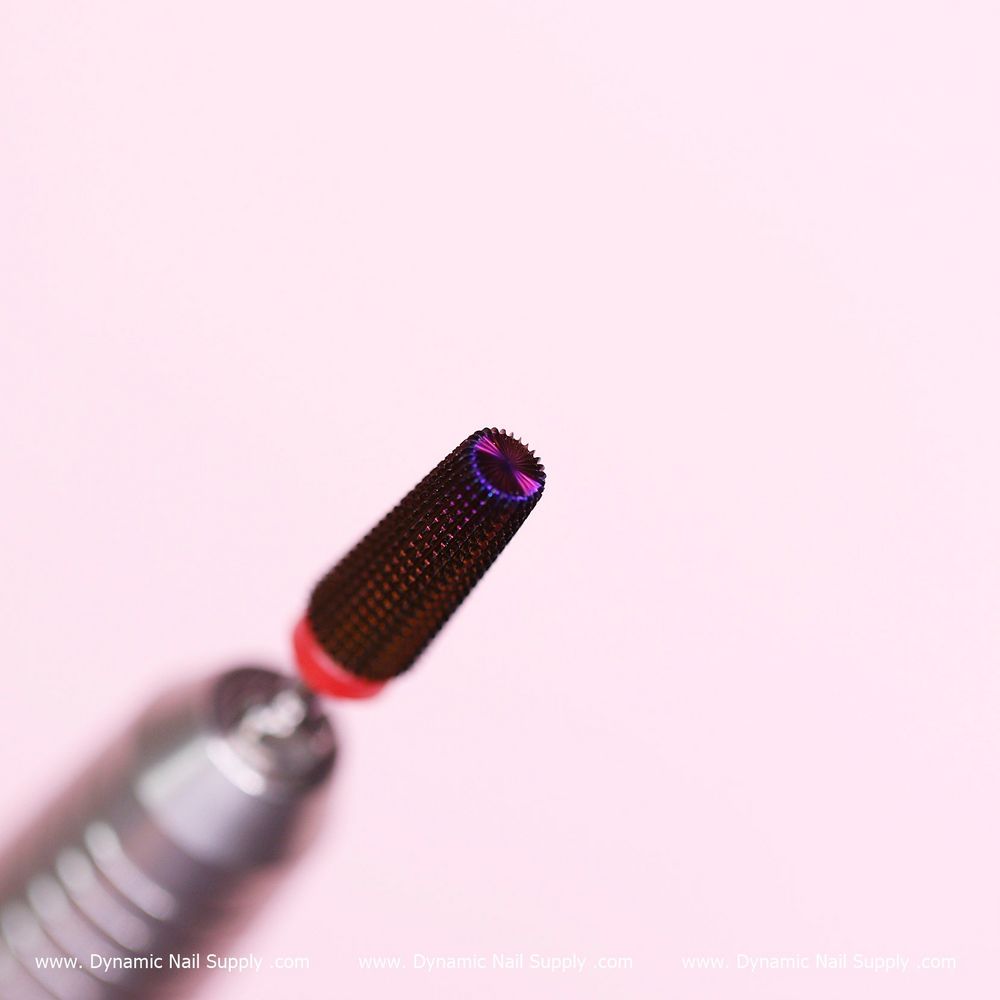
Light touch only. Rest the hand. Use the coral red rubber stopper for consistent depth cues. Position the stopper so the cutting grooves clear the surface by a hair. That reduces contact area. Work with small overlapping strokes. Lift for a count between passes. If you are left-handed, right-handed or ambidextrous, keep the same gentle approach. A steady light pressure prevents burning and avoids cutting.
If you want to see the tool clearly while you work, check the product frame shown here and how the matte silver handpiece and bright coral stopper sit for scale. For a direct link to the exact anodized titanium 5-in-1 fine grit bit, view the item here: https://dynamicnailsupply.com/products/5-in-1-fine-grit-drill-bit-titanium-color-for-sealing-cuticle-and-smooth-out-acrylic
When should you stop and cool?
Stop at the first sign of heat. Signs are warm skin, a dull brown edge, or a sharp smell. Pause for at least 5–10 seconds. Wipe away dust. Let the client’s skin breathe. Repeat short passes rather than one long pass. For sensitive clients, give longer pauses. Cooling avoids burns and preserves the bit’s finish.
How to maintain the anodized titanium finish and extend bit life?
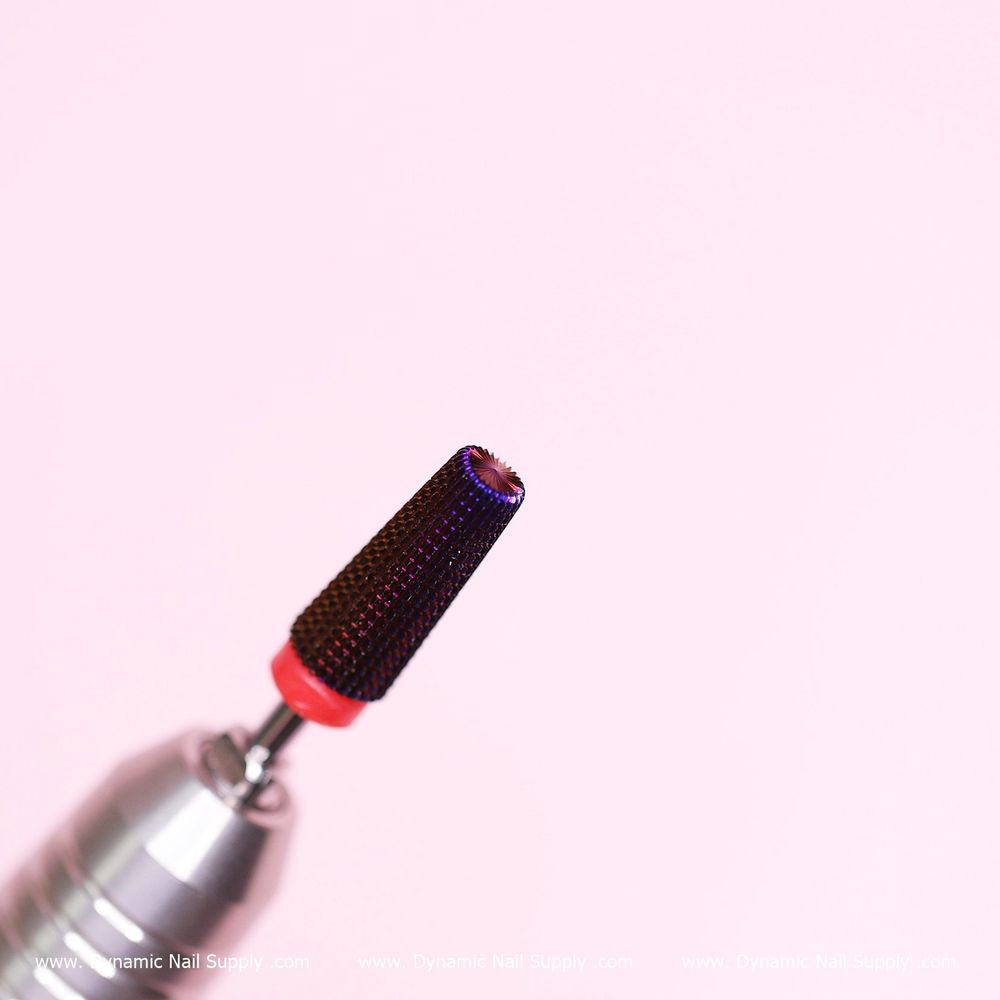
Clean after each client. Brush away debris with a soft nylon brush. Avoid aggressive metal brushes that can scratch the anodized surface. Use only recommended disinfectants for tools. Dry thoroughly. Store upright in a padded case to protect the iridescent purple and magenta highlights and the fine ridged texture. Rotate bits in your kit so none run continuously for long appointments. Inspect grooves for clogging and remove buildup before it changes friction.
What is a simple routine checklist?
- Set RPM to 5,000–12,000 for sealing and smoothing.
- Use light pressure. Short strokes. Lift between passes.
- Place coral rubber stopper for a consistent depth cue.
- Pause 5–10 seconds when skin warms or dust accumulates.
- Brush debris and disinfect after each use. Dry fully.
- Store upright in a padded tray to protect the anodized finish.
- Rotate bits to avoid continuous heavy use.
Any safety and handling notes?
Work slowly when you change angles near the eponychium. The fine grit reduces cutting risk but does not eliminate it. Keep the client’s comfort central. Check for heat and stop immediately if the client reports warmth. Use a clean rubber stopper and replace it if cracked. Prices may change, and the bit in the photo is offered at $11 currently.
Follow this calm routine and you will reduce heat titanium drill bit work to a reliable, luxurious step in your service. Treat the tool with care and it will reward you with smooth, sealed edges and comfortable clients.
Finish with confidence. Your chair feels safer. Your results look refined. Keep practicing gentle rhythm.